
"It's just wear and tear."
Osteoarthritis in a knee, hip, shoulder or hand
Stiffness in the morning, pain on the stairs, a joint that swells after a long day. You want more than learning to live with it.
Arthritis · Medellín, Colombia
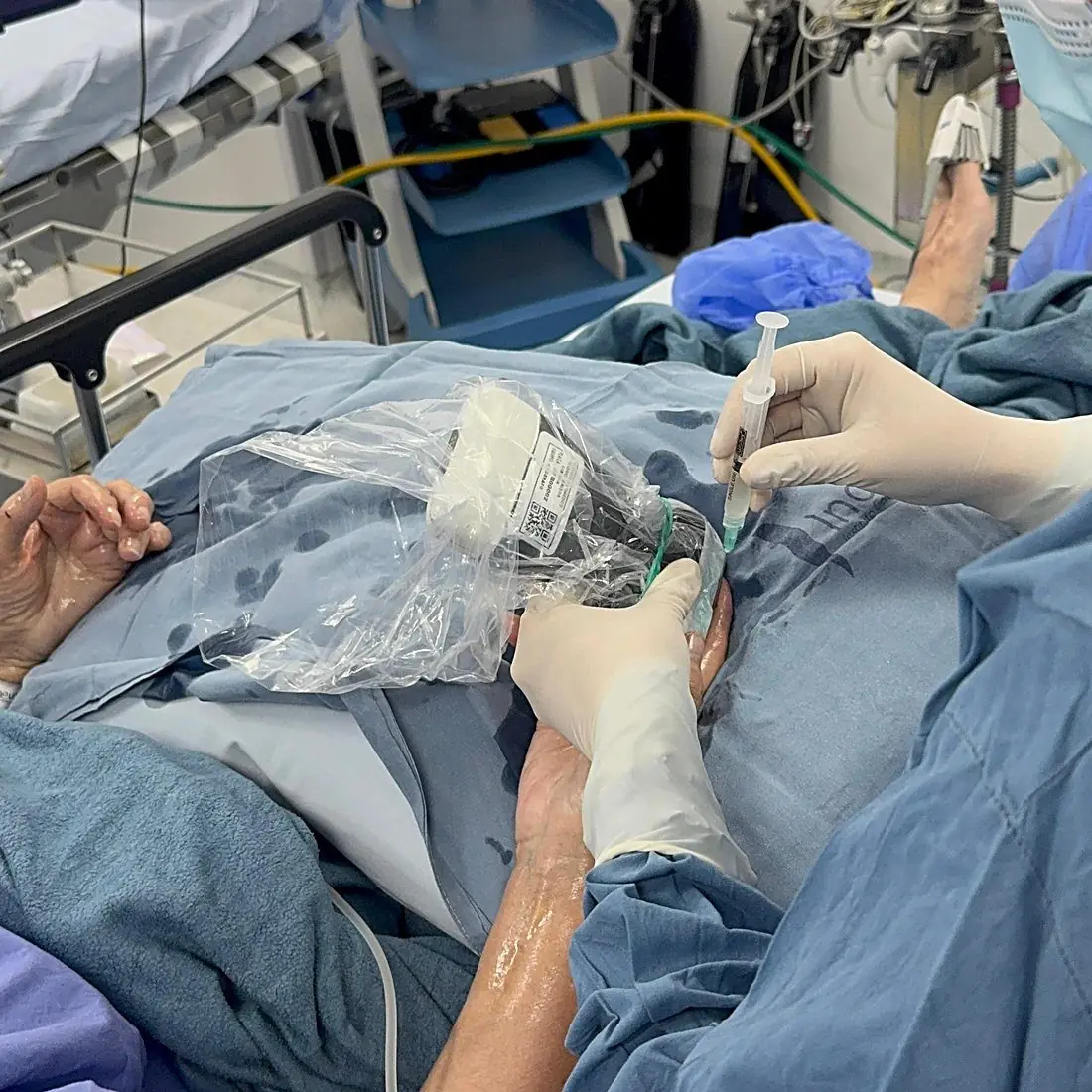
Osteoarthritis is wear inside one or a few joints, so the stem cells are placed right inside the joint, under ultrasound guidance, in one day. Rheumatoid arthritis is the immune system attacking many joints, so the cells go through the whole body, intravenously, over three days, with a rheumatologist. The first step is a specialist telling you which path is yours.
Who it helps
"It's just wear and tear."
Stiffness in the morning, pain on the stairs, a joint that swells after a long day. You want more than learning to live with it.
"The injections stopped working."
They helped for a while, and then the pain came back. You want to know what else acts inside the joint.
"My hands wake me up."
Swollen joints on both sides, fatigue, mornings that start slowly. Methotrexate or a biologic holds it, until it doesn't.
"Several joints hurt at once."
Send your X-rays and blood work. The specialist tells you which kind it is and which path fits.
"They told me bone on bone."
Grade 4 can also be treated. A specialist looks at your images and explains what you can expect.
What the cells do
In both kinds of arthritis, inflammation keeps the pain going and wears the joint down. Mesenchymal stem cells work mostly through the signals they release, which is why they are studied for both.
In osteoarthritis, the thin lining inside the joint (the synovium) becomes inflamed and keeps the joint swollen and sore. Placed inside the joint, the cells release signals that may help quiet that inflammation, which could mean less pain and stiffness.
Cartilage is the smooth tissue that lets bones glide. The growth factors the cells release are studied for how they may protect the cartilage that remains from the inflammation around it. In studies, the benefit shows most where you feel it: pain and daily function.
In rheumatoid arthritis, the immune system attacks the joints from the inside. Given intravenously, the cells are studied for how they may support the regulatory immune cells that act as a brake, aiming to calm the attack without switching the immune system off.
That is why the path changes. In osteoarthritis the problem is inside the joint, so the cells go there, under ultrasound. In rheumatoid arthritis the problem is in the whole body, so the cells travel with the blood.
In studies, the clearest benefits are less pain and better daily function, the changes patients notice most.
Which arthritis?
Osteoarthritis is wear in one joint. Rheumatoid arthritis is the immune system attacking many. They are treated differently.
Stem cells placed inside the joint, under ultrasound guidance, in the operating room. Best in grades 1 to 3, and grade 4 (“bone on bone”) can also be treated, after your specialist reviews your images.
Rheumatoid arthritis is autoimmune, so the cells go where the problem is: the whole body, intravenously, over three days. The rheumatologist reviews your blood work first.
What the evidence says
Every study shown here was checked on PubMed, with the kind of cells each one used.
Stem cell injections inside the knee eased pain and improved daily function compared with control treatments.
Systematic review and meta-analysis of 28 randomized trials in knee osteoarthritis, in studies using mesenchymal stem cells from several sources. Reactions were short-lived and limited to the injected joint.
Efficacy and safety of intra-articular mesenchymal stem cell-based therapies in knee osteoarthritis: A systematic review and meta-analysis of randomized controlled trials. · Clinical Rheumatology, 2026 ↗Umbilical cord stem cells in the knee were safe, and function scores improved at 6 months.
Systematic review and meta-analysis of 8 clinical studies with 688 people with knee osteoarthritis treated with umbilical cord mesenchymal stem cells. Lower doses showed the clearest pain relief, and side effects were mild and short-lived.
Regenerative Therapy in Osteoarthritis Using Umbilical Cord-Origin Mesenchymal Stem Cells: A Critical Appraisal of Clinical Safety and Efficacy Through Systematic Review and Meta-Analysis. · Stem Cells International, 2025 ↗Across 36 randomized trials in arthritis, stem cells eased joint pain without raising the rate of side effects.
Systematic review and meta-analysis covering osteoarthritis, rheumatoid arthritis and other inflammatory arthritis, in studies using mesenchymal stem cells. For rheumatoid arthritis the authors describe a potential benefit.
Efficacy and safety of culture-expanded mesenchymal stromal cell therapy in the treatment of 4 types of inflammatory arthritis: A systematic review and meta-analysis of 36 randomized controlled trials. · Seminars in Arthritis and Rheumatism, 2024 ↗In rheumatoid arthritis, disease activity improved in the 3 to 6 months after a single intravenous infusion, with acceptable safety over five years.
Five-year follow-up of 9 patients with rheumatoid arthritis who received a single infusion of umbilical cord blood mesenchymal stem cells. The authors suggest repeated doses may help extend the effect.
Long-term safety of intravenous human umbilical cord blood-derived mesenchymal stem cell therapy in rheumatoid arthritis: a 5-year follow-up study. · Stem Cells Translational Medicine, 2026 ↗In short: For osteoarthritis, many randomized trials show help with pain and daily function. For rheumatoid arthritis, human studies are encouraging and growing. Your specialist or rheumatologist reviews your studies and explains what you can expect.
Your treatment & price
The price follows the joint: small joints from $1,799, knee or shoulder from $1,999, hip from $2,199. Rheumatoid arthritis follows the autoimmune IV protocol, from $4,000.
The trip works like every treatment: Evaluation by the specialist, online consultation, and your days in Medellín. See your journey.
Arthritis in one joint · from $1,799
USD · final price confirmed after your medical consultation
Flights and meals not included.
Your medical team
For osteoarthritis, Dr. Diana Reyes, anesthesiologist and pain specialist, places the cells inside the joint under ultrasound guidance, in the operating room. For rheumatoid arthritis, Dr. Andrés Martínez, rheumatologist, reviews your blood work and leads your intravenous protocol. Either way, a physician reviews your studies before you book a flight.
Questions
Send your X-ray or MRI, and your blood work if you have rheumatoid arthritis. A specialist reviews them and tells you which path fits you. Grades 1 to 3 osteoarthritis respond best, and grade 4 (“bone on bone”) can also be treated, after your specialist reviews your images.
Your diagnosis and your studies tell. Osteoarthritis shows on an X-ray or MRI; rheumatoid arthritis shows in blood tests such as rheumatoid factor and anti-CCP. Send what you have and a specialist tells you which path fits.
In osteoarthritis, placed inside the joint, they release signals that may calm inflammation and support the cartilage that remains. In rheumatoid arthritis, given intravenously, they are studied for how they may help rebalance the immune response. The aim is less pain and better use of your joints.
For a joint, improvement usually builds gradually, between 4 and 6 months after the application. For rheumatoid arthritis, results are usually seen between 3 and 6 months after the intravenous protocol.
Osteoarthritis in one joint is treated in a single day in Medellín, under local anesthesia, and several joints can be treated on the same day. For rheumatoid arthritis, the most complete protocol combines a local application in the affected joints with the three-day IV; some patients do only one of the two, depending on the doctors’ review. For rheumatoid arthritis, two visits are usually recommended, the second 6 to 8 weeks after the first.
For osteoarthritis, an X-ray or MRI of the joint. For rheumatoid arthritis, X-rays of the affected joints, rheumatoid factor, anti-CCP, ESR, CRP, anti-RA33 and ANA. Every intravenous protocol also includes cancer markers.
Never on your own. Your rheumatologist or specialist reviews your current medication in your consultation and tells you exactly what to do. After a joint application, you take only what your doctor recommends, and no anti-inflammatories (NSAIDs).
Every intravenous protocol starts with cancer markers, for your safety: the treatment is designed for people without active cancer. Your specialist also reviews your general health and the joint itself, so your plan is designed for you.
Stem cell therapy is not approved by the FDA, but in Colombia it is legal. Joint applications are done by specialist physicians in a fully equipped operating room, under ultrasound guidance. Afterwards you rest at the hotel, one elevator away, with your coordinator checking on you.
Osteoarthritis treatment starts from $1,799 USD for a small joint, $1,999 for a knee or shoulder and $2,199 for a hip: the stem cells, the guided application in the operating room with local anesthesia, and a consultation with the doctor. Two large joints start from $3,998. The Marriott Hotel in the same building, airport transfers, sedation and exosomes can be added to your plan, and your coordinator sends that price in writing. The rheumatoid arthritis protocol starts from $4,000 USD: the stem cells IV, cancer markers, premedication and a consultation with the rheumatologist; exosomes, a blood detox IV, the hotel and transfers can also be added. Your exact price is confirmed after your consultation.
Your next step
Send any X-ray, MRI or blood work you have. A specialist tells you which path is yours, and how stem cells can help.