
"Manage it, that's all"
Parkinson's disease
The neurons that make dopamine are being lost gradually, with inflammation as part of the process. Your medication treats the symptom; you want something aimed at what drives it.
Stem cell therapy for neurological conditions · Medellín, Colombia
Stem cells for Parkinson's disease.multiple sclerosis.post-stroke recovery.traumatic brain injury.ALS.cognitive decline.
Mesenchymal cells and exosomes release anti-inflammatory factors that may help protect nerve cells and the tissue around them. Delivered into the cerebrospinal fluid, they are placed far closer to where they need to work than an IV can reach. Neurologist-led, in Medellín, from $4,000 intravenously, or from $7,300 intrathecally.
Who this is for
"Manage it, that's all"
The neurons that make dopamine are being lost gradually, with inflammation as part of the process. Your medication treats the symptom; you want something aimed at what drives it.
"Another relapse"
Your immune system is attacking the myelin around your nerves. Mesenchymal cells may help calm the immune system — the aim is to help rebalance that response.
"Rehab took me this far"
Around the damaged core, tissue stays inflamed and under-functioning. That surrounding area is where support can matter — alongside the rehabilitation that drives your progress.
"It was two years ago"
After a head injury, inflammation can keep extending the damage for months. The aim is to help modulate that response and support what still works.
"They told us there's nothing"
Motor neurons lose the natural support signals they depend on to keep firing. Restoring that support is exactly what this protocol aims at, with a plan your neurologist designs around your case.
"He forgets names now"
Neuro-inflammation accelerates the loss of neurons. The earlier the diagnosis, the more there is to protect — so reaching out early matters.
Don't see your condition here? The doctors also evaluate other neurological conditions case by case, and the neurologist is open to reviewing any case — send yours on WhatsApp.
How they get there
This is the decision that matters most in a neurological protocol, and it is made by a neurologist after reviewing your case — not by a price list.
Through the bloodstream, to the whole body
The cells and exosomes circulate everywhere your blood goes, releasing anti-inflammatory and neuroprotective signals as they travel. It is the route used for most systemic protocols, and it is the gentler of the two.
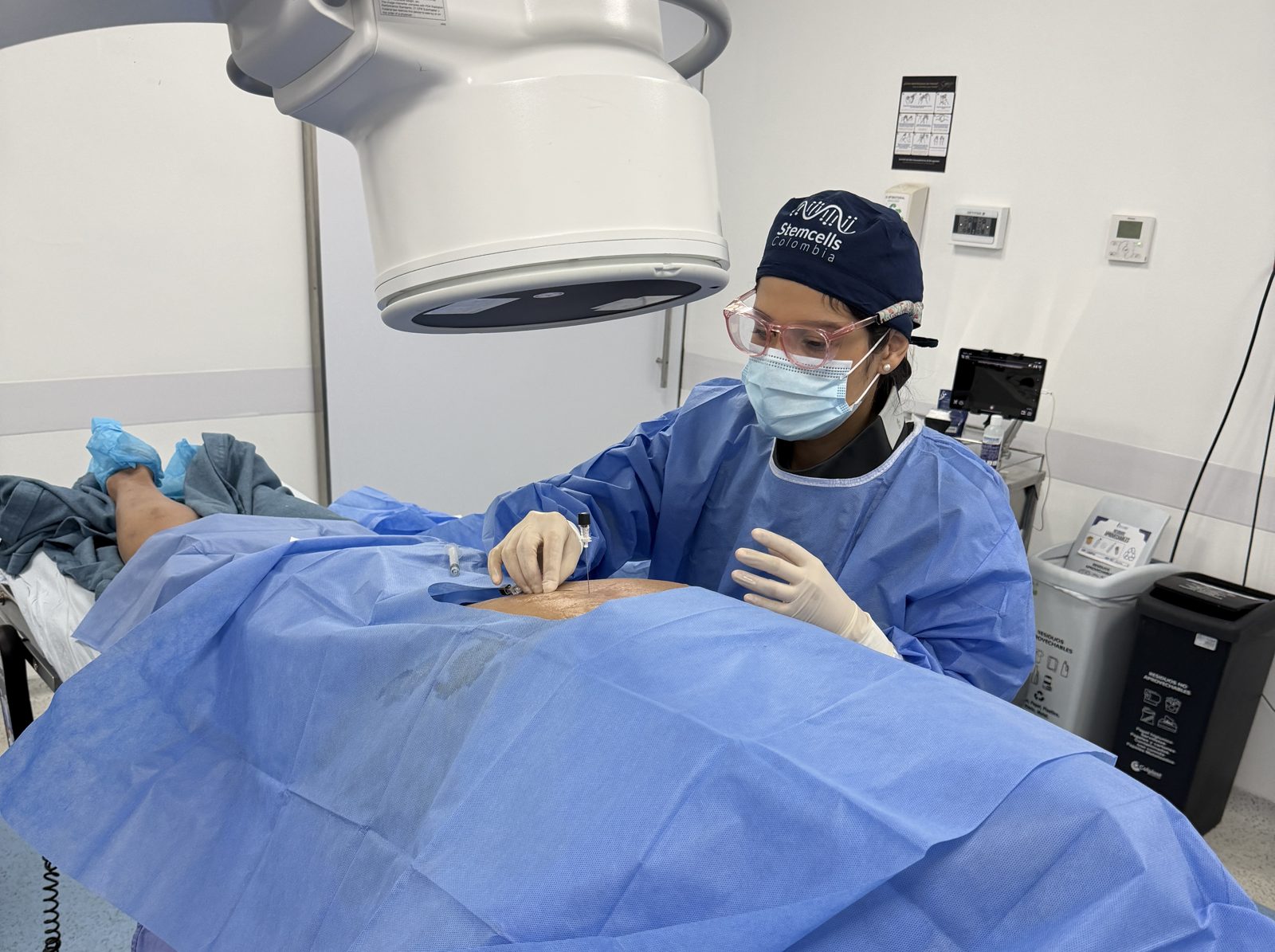
Into the cerebrospinal fluid itself
The cells are placed directly into the fluid that bathes your brain and spinal cord — far closer to where they need to work than an intravenous infusion can reach. It is performed in the operating room, and it is the reason many patients travel here specifically.
Designed for you: your neurologist reviews your case first, and every protocol starts with cancer markers, for your safety.
Both routes work alongside the neurologist treating you at home. The medical team coordinates with them, so your care stays connected.
Real patients
Patients travel to Stem Cells Colombia from all over the world. This is what they say about how it felt.
"The Doctors really appeared to care for the patients. It truly helped that they spoke english fluently ... The liaison was the most helpful and a delight to be with for my short stay."
"Amazing customer service leading up to the procedure as well as after."
"The doctor and staff was very friendly and gentle during the process. Definitely recommended."
Where the treatment is aimed
Here is exactly what the protocol aims to protect, so you know what to expect before you travel.
This is the starting point. The protocol focuses its effort right next to it, on living tissue, where support can matter most.
The starting point
Around the damage there is tissue that is inflamed, starved and under-functioning but still alive. This is the area the whole treatment is aimed at: cells and exosomes are studied to help calm the brain's immune cells that drive that inflammation, and to release natural factors that may help the neurons still there survive.
This is where the treatment works
The function you still have is worth defending. Lowering the inflammation that drives the process is how you protect it.
This is what the treatment protects
Every case is evaluated one by one by the medical team. Your plan is designed for you before you book a flight.
Your trip & your price
Here's exactly what happens — and exactly what's included.
Send your diagnosis, your imaging and your recent labs on WhatsApp. You get a clear answer before you travel.
A neurologist reviews your case with you by video, decides the route — intravenous or intrathecal — and designs your plan.
The intravenous protocol runs across three days: screening and premedication, then your cells, then premedication; the intrathecal protocol runs across four days. Airport pickup and a 4-star hotel with the treatment center in the same building can be added to your plan.
Online check-ins with your doctor, and coordination with the neurologist who treats you at home. For systemic conditions the doctors recommend two visits, the second 6–8 weeks after the first — and returning patients receive a returning-patient discount on the second visit.
Neurological protocol · from $4,000
USD · intrathecal from $7,300 · confirmed after your medical consultation
Flights and meals not included. Your exact protocol and route are confirmed after your medical consultation.
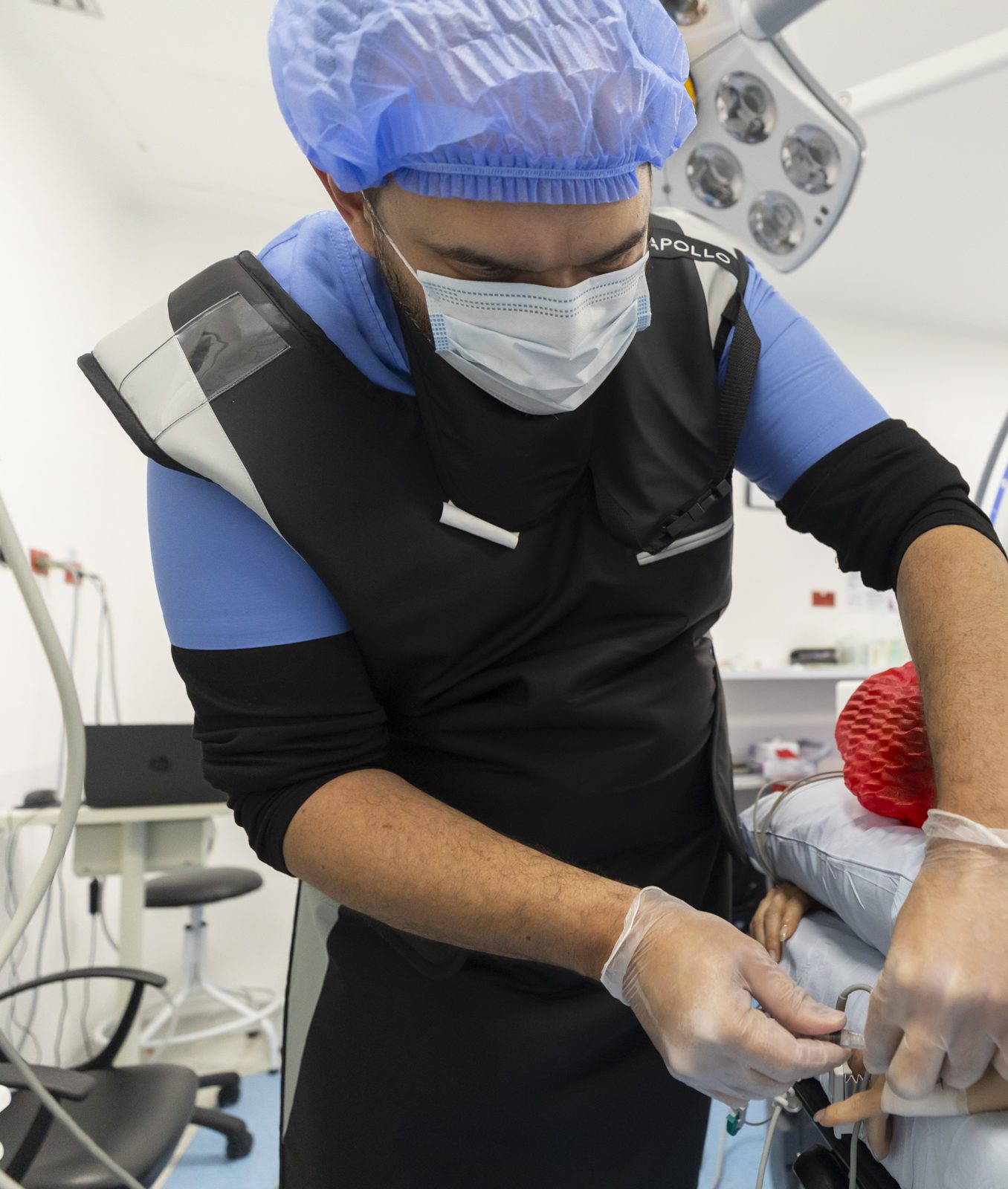 In the operating room
Your medical team
Neurological cases are reviewed and led by Dr. Zaida Cabezas, neurologist, who designs your plan and chooses the route. Dr. Diana Reyes, anesthesiologist and pain specialist, performs the application in the operating room — the precision an intrathecal procedure demands.
Neurological FAQ
Research suggests that mesenchymal cells may help calm the brain's immune cells that drive inflammation and support the survival of the neurons you still have — protecting the function that remains, which is the real aim of this protocol. The earlier the diagnosis, the more there is to protect.
The cells are placed directly into the cerebrospinal fluid that bathes your brain and spinal cord, in the operating room — far closer to where they need to work than an intravenous infusion can reach. Your neurologist reviews your case first, so your plan is designed for you.
That is decided by the neurologist after reviewing your diagnosis, your imaging and your labs — never by a price list, and never before your consultation.
No. This is designed to work alongside the neurologist treating you at home, never instead. Dopaminergic medication, disease-modifying therapy and anticonvulsants are never modified or replaced by this — your own neurologist leads that.
Every protocol starts with cancer markers, for your safety. Your diagnosis, imaging, labs and current medication are reviewed before you book anything.
The intravenous protocol runs across three days: cancer markers and premedication, then premedication and your stem cells, then premedication; a detox IV and exosomes IV can be added to your plan. The intrathecal protocol runs across four days: Day 1, cancer markers and nebulized exosomes; Day 2, premedication, a detox IV and nebulized exosomes; Day 3, premedication, the intrathecal application of your cells in the operating room, and nebulized exosomes; Day 4, exosomes by IV and nebulized exosomes. The neurologist reviews and leads your case, and the application is performed by Dr. Reyes or Dr. Toro. For systemic conditions the doctors recommend two visits, the second 6–8 weeks after the first — and returning patients receive a returning-patient discount on the second visit. Hotel and treatment center are in the same building.
Neurological protocols in Medellín start from $4,000 USD intravenously: the stem cells by IV, cancer markers, premedication and a consultation with the doctor. Exosomes, a detox IV, the Marriott Hotel in the same building and airport transfers can be added to your plan, and your coordinator sends that price in writing. Intrathecal delivery starts from $7,300. Comparable treatment in the US typically runs $30,000–$40,000+.
Improvement builds gradually, usually between 3 and 6 months — every body responds at its own pace. In stroke, brain injury and cerebral palsy, this accompanies rehabilitation, which drives your progress.
Stem cell therapy is not approved by the FDA, but in Colombia it is legal, and that is where your treatment takes place, performed by specialist physicians.
Mention it in the first message. Airport pickup can be added to your plan, and the hotel and treatment center share one building precisely so the trip is short and manageable, and the whole plan is built around mobility. Your coordinator handles every detail, so the trip feels easy.
Every body responds at its own pace; improvement usually builds over 3–6 months. What you can expect is the quality of the cells, a neurologist leading your case, and a medical team with you the whole way.
Your next step takes 2 minutes
Send the diagnosis, the imaging and the recent labs. A neurologist reviews them and designs your plan — before you decide anything.