
"I get out of breath on the stairs."
COPD or emphysema that limits your day
Walking, carrying bags, climbing a flight of stairs: each one takes more effort than it did a year ago.
Lung disease · Medellín, Colombia
Mesenchymal stem cells are studied for calming the long-running inflammation that damages the lungs in conditions such as COPD and pulmonary fibrosis. Here they are given intravenously, over three days in Medellín, and exosomes, also breathed in through a nebulizer, can be added. An internist or the functional-medicine physician reviews your case first, and the goal is clear: to help slow the progression.
Who it helps
"I get out of breath on the stairs."
Walking, carrying bags, climbing a flight of stairs: each one takes more effort than it did a year ago.
"They told me it’s fibrosis."
Scarring in the lungs that makes them stiffer. You want to know what is being studied besides the medicines you already take.
"My numbers keep dropping."
Your FEV1 or FVC, the measures of how much air you can move, keep going down, and you want to try to slow that.
"I don’t want to wait and see."
You are stable enough to fly and want to explore an option alongside your pulmonologist’s care, not instead of it.
"I want a clear plan."
A doctor looks at your CT and your breathing tests and explains what you can expect.
What the cells do
When mesenchymal stem cells are given through a vein, many of them pass through the lungs first. That is one reason researchers study them for lung disease: they may act on the inflammation and scarring right where it happens.
In COPD and fibrosis, the lungs stay inflamed for years, and that inflammation keeps damaging the tissue. The cells release signals that are studied for turning down this inflammation, which could mean slower damage over time.
Fibrosis happens when the lung keeps laying down scar tissue, a stiff material that makes breathing harder. In laboratory studies, mesenchymal stem cells reduce the signals that drive that scarring. In people, the aim is to slow it.
The cells release growth factors, proteins that help cells survive and repair. In animal studies they help protect the air sacs, called alveoli, and the tiny blood vessels around them, where oxygen passes into the blood.
Exosomes are tiny packages of signals released by the cells. When exosomes are added to this protocol, some can be delivered by nebulizer, a mist you breathe in, so they reach the airways directly, alongside the intravenous infusion.
These effects come from laboratory and animal studies, and human trials keep building on them with encouraging results.
The plan
For respiratory conditions the same protocol is usually repeated once. Here is how the two trips fit together.
What the evidence says
Human trials in chronic lung disease are growing. Several used mesenchymal stem cells from bone marrow rather than the umbilical cord, and each one is labeled below.
Pooling the COPD studies, people treated with stem cell-based therapies walked about 52 meters farther in six minutes, with a trend toward better lung function (FEV1).
Systematic review and meta-analysis of 11 studies with 371 COPD patients.
Stem Cell-Based Regenerative Therapy and Derived Products in COPD: A Systematic Review and Meta-Analysis. · Cells, 2022 ↗In idiopathic pulmonary fibrosis that was worsening quickly, repeated intravenous mesenchymal stem cells were followed by better lung capacity and walking distance than placebo, with no serious side effects.
Randomized, placebo-controlled trial, 20 patients in Russia; donor bone-marrow mesenchymal stem cells given intravenously every three months.
First-in-human high-cumulative-dose stem cell therapy in idiopathic pulmonary fibrosis with rapid lung function decline. · Stem Cells Translational Medicine, 2019 ↗In hospitalized patients with severe COVID-19 lung injury, umbilical cord mesenchymal stem cells given intravenously were safe and lowered inflammatory signals.
Double-blind, randomized phase 1/2a trial, 24 patients in intensive care in the United States. This was a sudden, acute lung injury; it is included because it used umbilical cord cells through a vein, as the Stem Cells Colombia protocol does.
Umbilical cord mesenchymal stem cells for COVID-19 acute respiratory distress syndrome: A double-blind, phase 1/2a, randomized controlled trial. · Stem Cells Translational Medicine, 2021 ↗In short: Across these trials, intravenous mesenchymal stem cells were well tolerated in people with lung disease, with encouraging signs in walking distance and lung capacity. Your doctor reviews your CT and breathing tests and explains what you can expect.
Your treatment & price
The infusion runs slowly, over three hours or more, with a physician present. Afterwards you rest with your coordinator checking on you; if you add the Marriott Hotel, it is one elevator away. Results are usually expected between 3 and 6 months.
Before booking, an internist or functional-medicine doctor reviews your case in an online consultation.
The trip works like every treatment: Evaluation by the specialist, online consultation, and your days in Medellín. See your journey.
Lung disease · from $4,000
USD · final price confirmed after your medical consultation
Flights and meals not included.
Your medical team
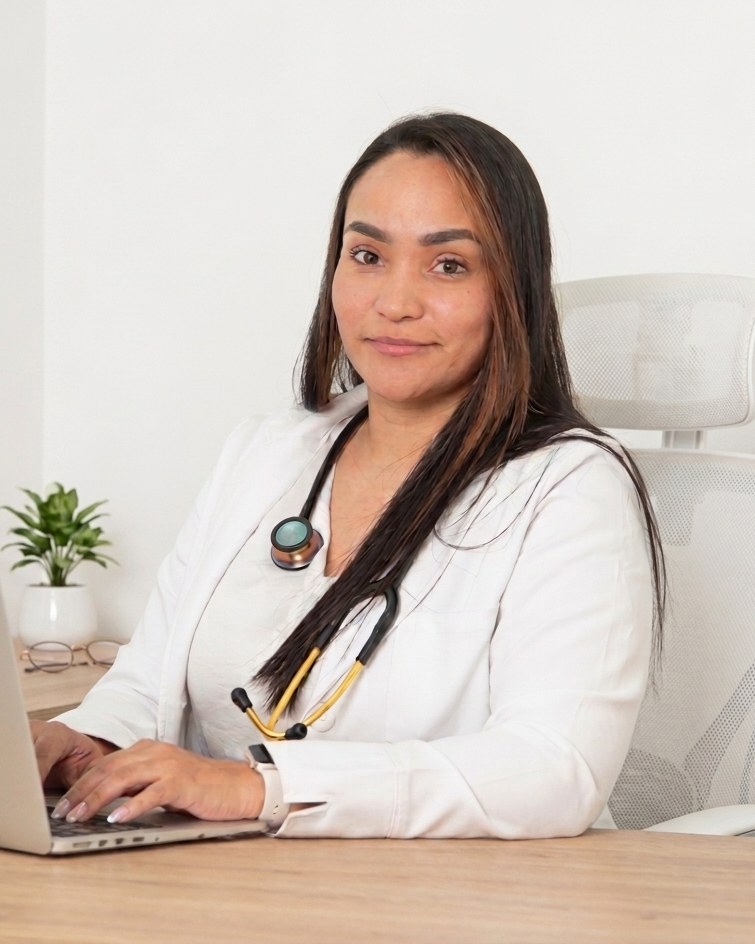
An internist or the functional-medicine physician, Dr. Luisa Mejía, reviews your CT and your breathing tests first, in an online consultation, and designs the protocol for your case. In Medellín, a physician oversees every infusion and nebulization, and you are followed online after you go home.
Questions
Adults with a chronic lung condition who are stable enough to travel may be candidates. Send your lung CT and your breathing tests; an internist or the functional-medicine physician reviews them and explains what you can expect, before you book.
Mesenchymal stem cells release signals that may help calm chronic inflammation and slow the signals that drive scarring. The aim is to support your lungs and help slow the progression.
To calm inflammation, support your body’s own repair and help slow the progression of COPD, emphysema or pulmonary fibrosis, alongside the care you already receive.
When exosomes are added to the respiratory protocol, part of them can be delivered by nebulizer, so they are breathed in and reach the airways directly, alongside the intravenous infusion.
Improvement is usually expected between 3 and 6 months after treatment. Repeating your breathing tests and a walking test with your own doctor shows you the change in numbers.
Two visits are usually recommended, 6 to 8 weeks apart, repeating the same three-day protocol. Returning patients receive a returning-patient discount on the second visit.
A chest CT scan, pulmonary function tests, alpha-1 antitrypsin (A1AT), CRP, a complete blood count and a metabolic panel. Cancer markers are done on day one in Medellín.
No. Keep all your current treatment, including inhalers, medicines and oxygen if you use it. The doctor reviews it in your consultation, and any change is for you and your pulmonologist to decide.
Every intravenous protocol starts with cancer markers, on day one, for your safety: the protocol is designed for people without active cancer. Your doctor also checks that you are ready to fly.
Stem cell therapy is not approved by the FDA, but in Colombia it is legal. The three-day lung protocol starts from $4,000 USD, after an online review consultation with the specialist: the stem cells IV, premedication and cancer markers. Exosomes, a blood detox IV, the Marriott Hotel in the same building and airport transfers can be added to your plan, and your coordinator sends that price in writing. Your exact price is confirmed after that consultation.
Your next step
A doctor reviews your CT and your breathing tests and explains what you can expect.