
"It's a partial tear, not a full rupture."
A partial tear on your MRI
A tendon, ligament or muscle that is partly torn. Rest helped, but it still hurts when you push, and you don't want to lose a season.
Sports injuries · Medellín, Colombia
Wharton's jelly stem cells, placed with ultrasound guidance right on the injured tendon, ligament or muscle. It takes one day in the operating room in Medellín, with local anesthesia. It is for partial tears and long-standing tendon pain in active people, from weekend players to former athletes, who want an option before surgery.
Who it helps
"It's a partial tear, not a full rupture."
A tendon, ligament or muscle that is partly torn. Rest helped, but it still hurts when you push, and you don't want to lose a season.
"My elbow has hurt for a year."
Tennis or golfer's elbow, patellar or Achilles tendon pain that flares every time you return to training. When a tendon hurts for months it is usually worn, not just inflamed.
"I keep pulling the same hamstring."
Hamstring, calf or groin strains that heal, then tear again as soon as you sprint or kick.
"PRP helped for a few weeks."
Physical therapy, cortisone or PRP (platelet-rich plasma, made from your own blood) gave a short boost, and then the pain returned.
"I'm not a pro, but I want to keep playing."
Running, soccer, tennis, cycling or the gym are part of your life. An old injury is starting to decide what you can do.
What the cells do
Tendons and ligaments have little blood supply, so they heal slowly and often with weak scar tissue. The cells are placed right on the injury, where they act mostly by releasing signals that guide the repair.
In a long-standing tendon injury, the healing process gets stuck in a low-grade, damaging inflammation. Stem cell signals may calm that inflammation and switch the local immune cells toward a repair mode. For you, this could mean an injury that finally starts to settle instead of flaring every week.
A strong tendon is made of collagen fibers lined up like the strands of a rope. After a tear, the body often patches it with disorganized fibers that tear again. Stem cell signals may support the local repair cells to lay down more orderly collagen, the goal being a tendon or ligament that tolerates load again.
Repeated muscle strains leave stiff scar tissue that makes the next tear more likely. Laboratory studies suggest stem cell signals may reduce that scarring and support muscle repair cells, and research in people is growing.
Less inflammation usually means less pain. That can make it easier to do the rehabilitation exercises that strengthen the injured area.
Stem cells are designed for partial tears and chronic tendon pain; if your MRI shows a complete rupture, your specialist guides you to the right first step.
60 seconds
Stem cells may help partial tears of tendons, ligaments and muscles. For a complete rupture, a specialist guides you to the right first step. Three questions, and your answers go straight to a specialist.
Question 1 of 3
What did you injure?
Question 2 of 3
What did the doctor call it?
Question 3 of 3
Do you have an MRI or ultrasound?
Your answer
Send my answers to a specialistWhat the evidence says
Tendons have the most human research so far. Here is what the studies found, and which kind of cells each study used.
Across 22 clinical studies, cell injections into injured tendons appeared safe, and most reported less pain and better function.
Systematic review of 658 patients with rotator cuff, elbow, knee-cap, Achilles and hip tendon problems. Most studies used the patient’s own cells.
Cell therapy efficacy and safety in treating tendon disorders: a systemic review of clinical studies. · Journal of Experimental Orthopaedics, 2022 ↗In chronic tennis elbow, donor stem cells placed under ultrasound were followed by less pain, better elbow function and smaller tendon defects over one year.
Pilot study of 12 adults. It used donor (allogeneic) mesenchymal stem cells from fat tissue, a different source from the Stem Cells Colombia cells, with no serious side effects over 52 weeks.
Treatment of Lateral Epicondylosis by Using Allogeneic Adipose-Derived Mesenchymal Stem Cells: A Pilot Study. · Stem Cells, 2015 ↗Stem cells injected into a long-standing painful Achilles tendon were safe, and pain and function improved over 24 weeks.
First-in-human phase IIa study, 10 adults whose Achilles pain had not improved with other treatments. It used the patient's own bone-marrow stem cells, a different source from the Stem Cells Colombia cells.
Autologous bone marrow derived mesenchymal stem cells are safe for the treatment of Achilles tendinopathy. · Scientific Reports, 2024 ↗For muscle injuries, an expert review describes stem cells and other biologic treatments as promising, supported by a growing body of research.
Expert review of treatments such as PRP, prolotherapy and mesenchymal stem cells for muscle injuries in athletes and military personnel.
Orthobiologics in Muscle Injury. · Clinics in Sports Medicine, 2024 ↗In short: Across tendon studies and several cell sources, the treatment was safe and people reported less pain and better function, including in chronic tennis elbow and Achilles pain. A specialist reviews your MRI for free and explains what you can expect for your injury.
Your treatment & price
After the application you rest with your coordinator checking on you; if you add the hotel, it is one elevator away from the operating room. Stay in Medellín at least 2 days. Let the cells work: no other treatments mixed in, and no anti-inflammatories.
Muscle and groin injuries start from $1,799.
The trip works like every treatment: free case review, online consultation, and your days in Medellín. See your journey.
Sports injury · from $1,599
USD · final price confirmed after your medical consultation
Flights and meals not included.
Your medical team
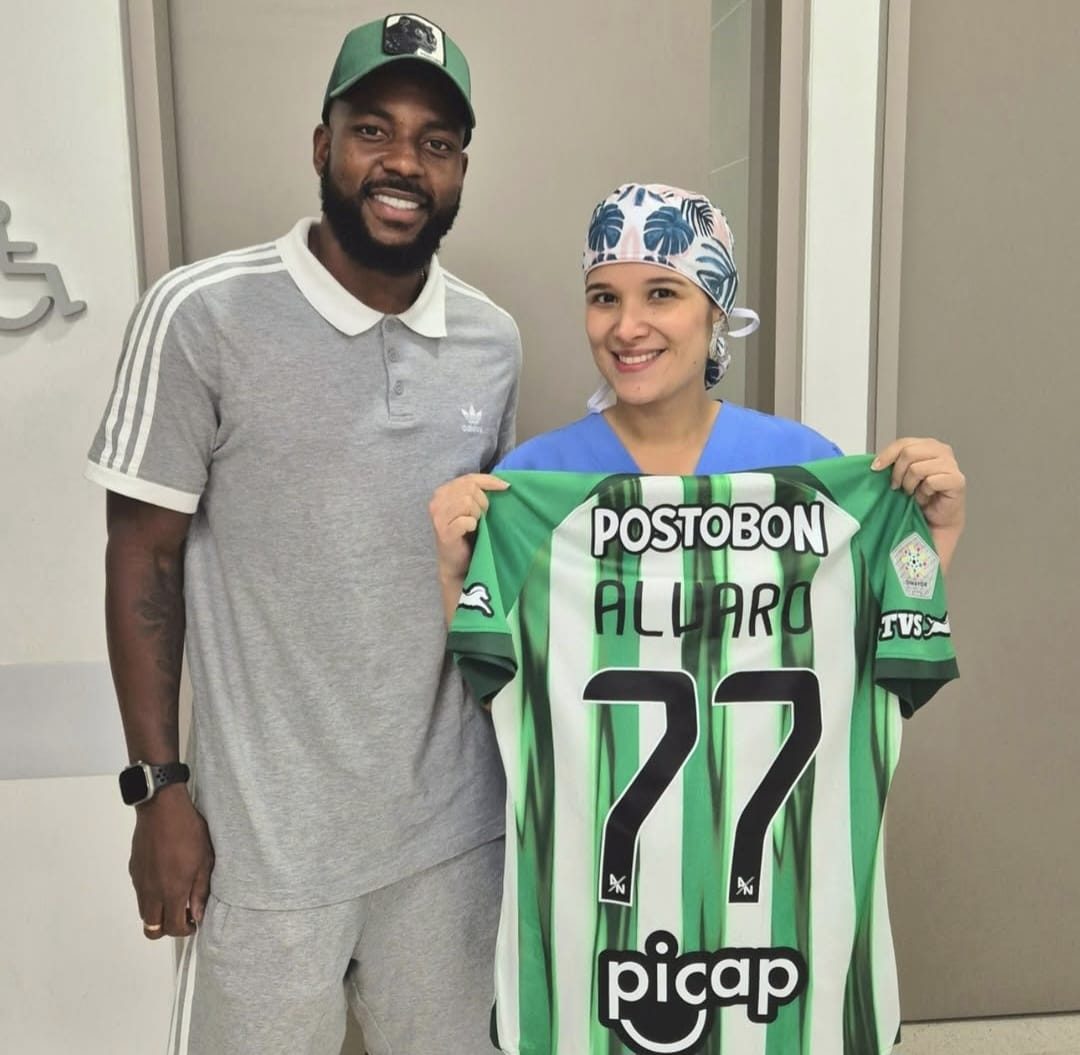
Dr. Diana Reyes, anesthesiologist and pain specialist, is the doctor professional football players come to, including players of Atlético Nacional, one of Colombia's best-known clubs. On treatment day she places the cells herself, with ultrasound guidance, right on the injury. Before and after your treatment, Dr. Felipe Salgado leads your online consultations.
Questions
If you have a partial tear of a tendon, ligament or muscle, or a tendon that has hurt for months, you may be. For a complete rupture, your specialist guides you to the right first step. Send your MRI or ultrasound and a specialist reviews it for free, before you spend anything.
They release signals that may calm the stuck inflammation of a chronic injury, support more orderly repair of collagen in tendons and ligaments, and ease pain. The aim is an injury that tolerates training again.
The first days you rest at the hotel, one elevator away, with your coordinator checking on you. Your doctor then tells you when and how to return, based on your injury. Cells work gradually: improvement is usually expected between 4 and 6 months.
One treatment day in Medellín, plus three online consultations: one before and two after. At six months your team measures your improvement: above 20%, a second application may be recommended to build on it.
An MRI or ultrasound of the injury, ideally recent, with the report. If you don't have one, your coordinator can arrange an MRI in Medellín from $200 per body area, transfers included.
Do not stop any medication on your own. Your doctor reviews what you take in your online consultation. After the application you take only what your doctor recommends, and no anti-inflammatories (NSAIDs such as ibuprofen). Please also avoid mixing in other treatments, so the cells can work on their own.
Your specialist reviews your health history before you book anything, so your plan is designed for you. The treatment is for people without active cancer, and anything else is checked case by case by the medical team.
They are different. PRP (platelet-rich plasma) uses growth factors from your own blood and contains no living stem cells. Stem cell therapy places living cells on the injury, which release signals that may guide repair over months. Your specialist tells you which makes sense for your case.
A tendon or ligament injury starts from $1,599 USD: the stem cells, the guided application in the operating room with local anesthesia, and a consultation with the doctor. A muscle or groin injury starts from $1,799. The Marriott Hotel in the same building, airport transfers, sedation and exosomes can be added to your plan, and your coordinator sends that price in writing. Your exact price is confirmed after your consultation.
Stem cell therapy is not approved by the FDA, but in Colombia it is legal. Your application is done by a specialist physician in a fully equipped operating room, with ultrasound guidance, after your case has been reviewed.
Your next step
Send your MRI or ultrasound report. A specialist reviews your injury for free and tells you how stem cells can help, before you spend anything.